× Home Calendar Courses Club CIAO Request A Course VitalStim® Info VitalStim® Registry Products eCourse Bundles About Us Our Mission Podcasts FAQs/Forms Toys & Tools Search Contact Login!

Course Description

Welcome to VISCON 2026!

Where Vision, Brain, and Body Come Together

The neuro-vision conference designed to connect the dots between accommodation, autonomic function, visual processing, and interdisciplinary care. Over three powerful days, you’ll uncover how the brain, eyes, and body work together — and what happens when those systems break down. VISCON 2026 will be led by industry leaders, including Dr. Michael Saxerud, a Doctor of Optometry, delivering expert-led sessions that bridge therapy and eye care, with engaging demonstrations, collaborative case studies, and actionable strategies that elevate real-world clinical outcomes. VISCON 2026 equips you with the clinical insight and hands-on strategies to elevate outcomes for every client you treat.

FRIDAY:

Don’t Lose Focus!  Visual Accommodation for Learning and Life

Sharpen your clinical vision and take a deep dive into visual accommodation– the brain-driven process that keeps our world in focus.  This four-hour course offers allied health practitioners an overview of the visual skill of accommodation through an occupational therapy lens.  Explore the neural pathways that support this critical function, examine common diagnoses (such as accommodative insufficiency, infacility, presbyopia, and others), and understand their impact on functional vision and occupational performance. Interactive elements, including case study video presentations and treatment ideas, ensure participants translate theory into practice. By the end of this course, you will gain practical skills to assess accommodative function and design interventions that enhance performance with adaptable strategies for clients across ages and settings.

SATURDAY:

Understanding the Body’s Automatic Control Center

This course offers an in-depth examination of the autonomic nervous system (ANS), the vital network that regulates involuntary physiological functions, including heart rate, digestion, respiratory rate, and others. Allied health practitioners will examine the anatomy and function of the ANS, including its sympathetic and parasympathetic divisions, pathways, neurotransmitters, and mechanisms of action. Throughout the program, learners will examine how the autonomic nervous system responds to stress, what occurs when the system cannot adapt, and how this impacts the visual system and limits vision rehabilitation. Case Examples and interactive activities will help learners integrate theoretical knowledge with practical application to help their patients. By the end of the course, practitioners will be able to identify the components of the ANS, explain its role in health and disease, and apply treatment strategies to clinical scenarios. This course is ideal for allied health practitioners seeking a comprehensive understanding of the autonomic nervous system and effective strategies for working with neuro-vision patients.

Interdisciplinary Insights: Using a Collaborative Model of Care

This course explores the collaborative relationship between occupational therapists (OTs) and optometrists (ODs) in supporting patients with neuro-vision challenges. Participants will learn how interdisciplinary teamwork enhances assessment, treatment planning, and intervention for individuals experiencing visual and functional difficulties. Through real experiences and interactive discussions, practitioners will gain practical strategies for integrating OT and OD expertise to achieve better patient outcomes. By the end of the course, learners will understand the value of collaborative care and be equipped to implement coordinated approaches in clinical practice.

SUNDAY:

Case study presentations:

This interactive case study session offers participants an inside look at the collaborative evaluation and treatment process for individuals with neuro-vision challenges. Through real-world clinical examples, learners will explore how occupational therapists and optometrists work together to identify visual–motor, perceptual, and autonomic factors that impact daily function. Participants will gain insights into clinical reasoning, patient-centered collaboration, and outcome measurement—bridging theory and practice for improved functional vision and participation in everyday life.

Roundtable

Hear from all the instructors as they answer questions and provide additional insight on the past weekend and look to the future of remedial vision therapy.

Course Requirements:

  • Computer with internet and working speakers/sound are required for this course.
  • Course must be completed within 30 days of activation (activate course within 6 months of purchase).
  • An online multiple-choice quiz (80% passing score) and submission of an online evaluation form are required for successful completion.
  • A certificate of completion will be available to print immediately after course is successfully completed.

Course Objectives

Upon successful completion of this course, participants will be able to:

  • Fri: Identify the neural pathways and physiological mechanisms underlying the visual process of accommodation.
  • Fri: Differentiate between common accommodative diagnoses, including accommodative insufficiency, infacility, excess, and presbyopia, and relate their impact on functional vision and occupational performance.
  • Fri: Apply evidence-informed screening and assessment strategies to evaluate accommodative function within an occupational therapy or allied health framework.
  • Fri: Develop treatment ideas and environmental adaptations that support visual efficiency and participation in daily activities for clients with accommodative challenges.
  • S1: Identify the anatomy and functional organization of the autonomic nervous system, including the sympathetic and parasympathetic divisions.
  • S1: Differentiate between typical and dysregulated autonomic responses, including those associated with neuro-visual and sensory processing disorders.
  • S1: Analyze case examples to recognize clinical indicators of autonomic imbalance and its impact on visual and functional performance.
  • S1: Apply evidence-informed treatment strategies and regulation techniques to support autonomic balance in patients with neuro-visual dysfunction.
  • S2: Explain the value of OT–OD collaboration and identify practical strategies for integrating interdisciplinary approaches to improve patient outcomes in neuro-vision care.
  • S3: Define what 20/20 is and what it is not.
  • S3: Describe how vision is a process of the brain, not of the eyes alone.
  • S3: Correlate how correct perception leads to efficient eye movements, correct posture and efficient body movement.
  • S3: Identify how incorrect perception leads to poor eye movements, incorrect posture and inefficient body movement.
  • S3: Specify various peripheral occlusion techniques to rehabilitate their patient’s perception.
  • CS: Analyze case examples to identify key visual, sensory, and functional factors impacting occupational performance.
  • CS: Apply principles of clinical reasoning to develop patient-centered and collaborative care strategies for individuals with neurovisual challenges.

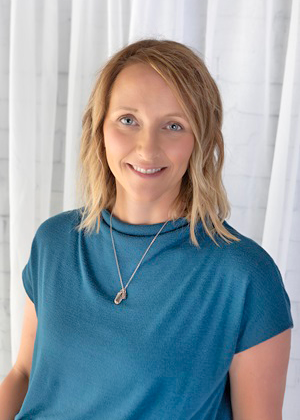
Suzanne Briggs

OTD, OTR/L

Suzanne Briggs, OTD, OTR/L, earned her Doctor of Occupational Therapy degree from Salus University in 2023, along with a certification in remedial vision rehabilitation. She graduated Summa Cum Laude and received the Alumni Association Award for Top Graduate. Suzanne is a member of the American Occupational Therapy Association (AOTA) and has an interest in research related to remedial vision and acquired brain injury. She also holds a Level 2 fellowship with the Neuro-Optometric Rehabilitation Association (NORA), which promotes collaboration among multiple disciplines to achieve successful outcomes for patients with neurological diagnoses.

Suzanne developed a passion for vision rehabilitation while working with patients who have acquired brain injuries and vision limitations. This passion motivated her to further her education in remedial vision. She has developed the remedial vision program at her clinic and offers treatment in collaboration with neuro-optometrists. Her patients also benefit from her extensive knowledge of mCIT, stroke recovery, and concussion management. Suzanne has been a guest lecturer at local brain injury support groups and universities. She recently presented a course on remedial vision at the Occupational Therapy of Colorado Association annual conference in 2024, as well as at VISCON 2024 and 2025: Vision Rehab Summit. She completed research on occupational therapy-led remedial vision, which was published in the Open Journal of Occupational Therapy in October 2024. She also presented a poster about the study at several conferences, including the NORA Annual Conference in 2023, the AOTA Rehabilitation Conference in 2024, and the AOTA Inspire Annual Conference in 2024. Additionally, she presented her research at the 36th Annual Rocky Mountain Interprofessional Evidence-Based Practice Symposium in 2024.

Suzanne is the clinic director at Colorado Springs Neurological Associates (CSNA) Therapy Center, where she provides evidence-based treatments for vision deficits. She aims to further the role of occupational therapy in remedial vision through research, education, and patient care.


Amber Fessler

OTD, MS, OTR/L

Amber Fessler, OTD, MS, OTR/L is a pediatric occupational therapist of eighteen years residing in Rapid City, SD. She
graduated from the University of Mary with a Master of Science in Occupational Therapy in 2004 and completed her
Doctorate of Occupational Therapy with a specialty certification in Remedial Vision Rehabilitation from Salus University in
2020. Amber has a diverse clinical background in pediatrics having worked in early intervention, public school, outpatient,
and vision therapy clinic settings. Currently, she is the owner and occupational therapy practitioner of a private practice
focusing on pediatrics with learning-related vision deficits in close collaboration with optometry doctors. She is a
contributing author for book chapters in the upcoming 4th Edition of Understanding and Managing Vision Deficits: A Guide
for Occupational Therapists and published research on occupational therapy and optometry collaboration in the care of
pediatric patients in the Vision Development and Rehabilitation journal.


Michael Saxerud

OD

Dr. Saxerud is a licensed optometrist practicing in Colorado Springs with a clinical focus in neuro-optometry, spatial vision processing, and functional vision care. Dr. Saxerud provides care to individuals of all ages, from children through older adults, and specializes in evaluating and treating visual deficits related to neurologic injury, concussion, stroke, and developmental conditions affecting visual processing, eye teaming, spatial awareness, and visual-motor integration.

Dr. Saxerud has a particular interest in spatial vision processing, including how visual input supports posture, balance, movement, and orientation in space. This perspective informs vision processing methods that drive vision treatments into functional strategies for daily performance.

A strong advocate for interdisciplinary care, Dr. Saxerud works closely with occupational therapists and other rehabilitation professionals to integrate visual processing strategies into therapeutic plans, supporting improved participation in daily activities, work, and learning.

Known for a thoughtful, patient-centered approach, Dr. Saxerud emphasizes education, individualized care, and evidence-informed practice. Through ongoing professional development, Dr. Saxerud remains committed to advancing neuro-optometric rehabilitation and collaborative care across Colorado.


Robert Constantine

OTR\L

Robert Constantine, OTR\L is a 1997 graduate of University of Alabama at Birmingham Occupational Therapy program where he was awarded the Charles Brooks Award for Creativity. He has practiced in home health, and skilled nursing contexts and spent 9 years as the clinical specialist in brain injury at the West Florida Rehabilitation Institute where he developed a passion for evidenced-based treatment, sharing information and the functional effects of the visual system. Beginning in 2013, he enjoyed a 3 year tenure at an optometry practice where he learned techniques working closely with low vision, pediatric and adult optometrists. He has received Clinical Level 1 and 2 training offered by the Neuro-Optometric Rehab Association. He was also instructed in sports vision training working with the High Performance Vision Associates, a national group of optometrists that offer sports vision screenings to elite athletes. He developed specialized Drag Racing Glasses and has worked with NHRA Sportsman and Professional Drag Racers. He continues to provide vision rehabilitation services to pediatric and adult patients at the Pearl Nelson Center and Kindred at Home in Pensacola, Florida. Robert has been a national and international presenter for since 2016. His courses are engaging and full of personal experience and the latest evidence-based research.
Financial Disclosure: Rob receives honoraria from CIAO Seminars for the presentation of this course. Non-Financial Disclosure: None

60 Minutes
Neuropathways of visual accommodation - Anatomy, ANS Role
60 Minutes
Diagnoses of Accommodation: Definitions, What is the OTs role
60 Minutes
Assessment: Low tech, High Tech Age Ranges
45 Minutes
Intervention (include options for what the activities would look like in different settings)
15 Minutes
Questions
30 Minutes
Function: Sympathetic, Parasympathetic
30 Minutes
Anatomy: Sympathetic, Parasympathetic
30 Minutes
Theory: Polyvagal, Stanley Rosenberg
20 Minutes
Causes
40 Minutes
How to recognize it in a patient
35 Minutes
Interventions/treatment
20 Minutes
Interdisciplinary Insights: Facilitators and barriers to collaboration
20 Minutes
Interdisciplinary Insights: Strategies for advocating for OTs or allied health practitioners
15 Minutes
Questions
30 Minutes
Basic Ocular Anatomy
60 Minutes
Refractive Error and Lens Correction
30 Minutes
Common Ocular Pathologies and Their Impact on Rehabilitation
30 Minutes
Visual Pathways in the Brain
60 Minutes
Vision as a Whole Body / Whole Brain Process
30 Minutes
Effects of Visual Processing on Posture and Movement
60 Minutes
Case Study 1 - Taping techniques *include documentation
60 Minutes
Case Study 2 - Accommodation *include documentation
780 Minutes
Case Study 3 - Autonomic Nervous System intervention * include documentation
60 Minutes
Roundtable Discussion
16.0 Hours
Total

Delivery VIA:

  • Online - This course is offered in an online, on demand format.
  • Club CIAO Plus - Club CIAO Plus: This course is also part of Club CIAO Plus, our all-you-can-eat buffet of online courses (inluding 1 and 2 day courses) for one low price. Club CIAO Plus Members also receive 25% off of all Live Stream courses!

Contact hours pre-approved for:

  • 16 Hours
  • This course meets PDU requirements for NBCOT (16 PDUs)
  • CIAO is an Illinois Approved Provider for PT/PTA Continuing Education
  • CIAO is recognized as an Approved Provider for PT/PTAs by the NYSE Dept State Board for PT
  • This activity is provided by the Texas Board of PT Examiners Accredited Prov #2802009TX
  • This activity meets continuing competence requirements for PT/PTA license renewal in TX
  • The assignment of Texas PT CCUs does not imply endorsement of specific course content, products or clinical procedures by TPTA or TBPTE
  • The Physical Therapy Board of California recognizes CIAO Seminars as an Approval Agency to Approve Providers Offering Continuing Competency Courses
  • The Physical Therapy Board of California has determined that CIAO meets the standards set forth in section 1399.95 of the CA Code of Regulations
  • CIAO is a Rule Approved Provider for the Florida Board of Physical Therapy
  • CIAO is an Approved Provider for the Florida Board of Occupational Therapy
  • Approved for:
  • 16 Hrs. PT/PTAs in IL, TX (TX(16 CCUs, APTA#2802009TX)
  • 19 Hrs. OT/COTAs, PT/PTAs in FL (CE Broker #20-1370171)
  • 19.2 Hrs. PT/PTAs in NY
  • 16 Hrs. Registered with CEBroker for OT/COTAs in AL, AZ, GA, LA, MS, SC, TN
  • 16 Hrs. Registered with CEBroker for PT/PTAs in AZ, GA, OK, SC

Course meets requirements for:

  • PT/PTAs in AL, AK, AZ, AR, CO, CT, DC, DE, GA, HI, ID, IN, IA, KS, KY, ME, MD, MA, MI, MO, MT,
  • PT/PTAs in NE, NH, NC, ND, OR, PA, RI, SC, SD, UT, VT, VA, WA, WI, WY
  • OT/COTAs in AL, AK, AZ, AR, CA, CO, CT, DE, DC, GA, HI, ID, IL, IN, IA, LA, KS, KY, ME, MD, MA, MI, MN, MS, MO, MT,
  • OT/COTAs in NE, NV, NH, NJ, NY, NC, ND, OH, OK, OR, PA, RI, SC, SD, TN, TX, UT, VT, VA, WA, WV, WI, WY


  • CIAO Automatically reports to CE Broker for Florida Occupational and Physical Therapists and Assistants. Florida SLPs can either use the ASHA CE Participant Form (Bubble Sheet) or self-submit through CE Broker.


    CIAO is recognized on the NBCOT Provider Registry (meets PDU requirements for NBCOT)


    Reviews

    This is a new course, there are currently no reviews. Please check back. Thank you and have a great day, CIAO!